
Car auctions in Brazil are popular with individuals, dealers, and businesses seeking lower vehicle prices. How car auctions work in Brazil depends on the type of auction, legal requirements, and payment processes.
Buyers need to follow strict steps to avoid financial or legal issues. This guide will walk you through each phase clearly.
Types of Car Auctions in Brazil
Brazil has three primary car auction formats you should understand. Each type has different ownership backgrounds and legal considerations.

Judicial Auctions
Judicial auctions involve vehicles seized due to legal issues. These are usually court-ordered seizures resulting from debt, lawsuits, or criminal cases.
The process follows official court procedures and is often slower. Vehicle conditions are not guaranteed.
Extrajudicial Auctions
These auctions include bank-repossessed cars or vehicles from insurance claims. They are typically in better shape than judicial units.
Financial institutions hold these auctions to recover losses. Rules and timelines are more flexible.
Public or Government Auctions
Public auctions are managed by agencies like Detran or Receita Federal. These typically involve government fleet vehicles or seized assets.
Listings are official and available to the public. The process is formal and legally secure.
Choosing a Reliable Auction Platform
Before you join an auction, it’s essential to select a trustworthy provider. Some platforms are licensed and regulated, while others are not.
Certified Auctioneers
Look for auctioneers registered with commercial boards (Junta Comercial). Verified platforms like Copart Brasil and Sodré Santoro are widely used. Always confirm the platform’s legitimacy.
Platform Support and Access
Check whether the auction website offers reliable customer support. You need proper documentation handling and bidding assistance. Secure login and ID verification are standard requirements.
Step-By-Step: Preparing for Auction Day
Getting ready involves paperwork, registration, and sometimes deposits. You must complete these tasks before you can place a bid.
Required Documents and Setup
To register, you need a CPF (Brazilian Tax ID), proof of residence, and a government-issued ID (RG or CNH). Even foreigners must present a CPF.
Create a profile and upload your documents to the auction site. Approval can take a few hours or days.
Deposit Policies
Some auctioneers require a refundable deposit to activate your bidding rights. The deposit amount ranges from R$1,000 to R$3,000.
This serves as your commitment to follow through on a winning bid. If you don’t win, the deposit is returned.
Know What You’re Buying
Before placing any bids, make sure you understand exactly what’s being offered. Most of this information is in the edital.
The Edital Explained
The edital is the official auction document. It outlines car conditions, legal restrictions, debts (such as IPVA), and fees.
Auction houses usually charge a 5% commission. Always read it before bidding.
What to Watch For?
Check for unpaid taxes, past fines, or liens. Review detailed photos and written descriptions. Compare similar listings across platforms. Understand which fees you’ll be responsible for.
Inspection: Visit the Yard If Possible
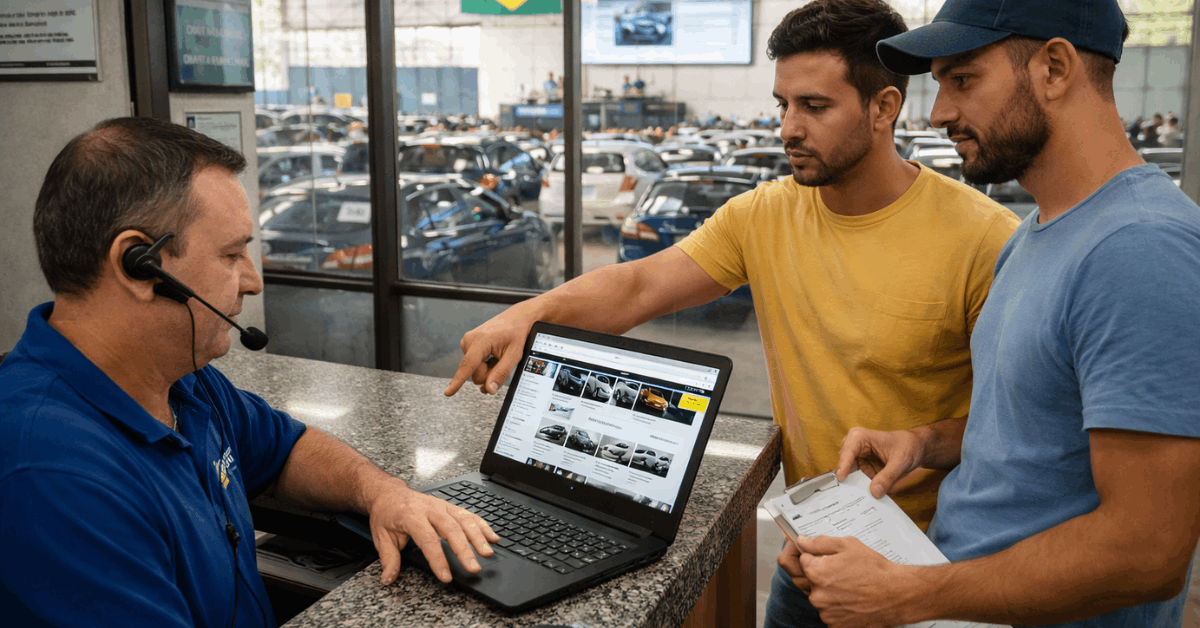
Many auction yards (pátios) allow you to physically inspect the cars. While test drives aren’t permitted, in-person inspection is still helpful.
What You Can and Can’t Do??
You can look at the exterior, check the seats, and confirm the visible condition. Some auctions let you check the battery and tires.
Starting the engine is usually not allowed. Bring a flashlight and someone who understands vehicles if you’re unsure.
Auction Day: How Bidding Works?
Let’s break down what to expect when the auction starts. Bidding happens online, in person, or both.
Pre-Bidding Phase
Some auctions let you place pre-bids online. This is your chance to offer an amount before the live session.
If nobody beats it, you might win automatically. Pre-bidding helps you gauge demand.
Live Auction Format
Each vehicle gets a 10 to 40-second window. Prices rise fast, so stay focused. Use filters to track vehicles you’re interested in. Know your limit before the bidding starts.
Conditional Sales
If your bid is highest but under the reserve price, the sale is “conditional.” The seller must approve your offer later.
You may wait a day or more for confirmation. This is common with higher-value units.
After Winning: What Happens Next
If you win a car, you must act quickly. Brazil’s auction system has strict deadlines and no leniency.
Payment Timeline
Payment is usually due within 24 to 48 hours. It includes the winning bid, 5% auction fee, and any admin fees.
Use TED or boleto to make a payment. Late payment disqualifies you and could forfeit your deposit.
Transfer and Documentation
You’ll receive a CRV (Sales Certificate) from the auctioneer. Use it to transfer ownership at your local Detran.
You’re responsible for paying any remaining IPVA or fines listed in the edital. Detran will not process the transfer without cleared debts.
Removing the Vehicle From the Yard
Yards will hold your car for a short period after payment. You must arrange pickup within the allowed timeframe.
Logistics and Deadlines
Most yards give you 5 to 10 business days for removal. Delays beyond that result in daily storage fees.
Bring proper ID and pickup authorization. Some yards require scheduling your pickup in advance.
Key Considerations Before Participating
Even experienced buyers face risks when joining auctions. Make sure you evaluate these points beforehand.
Final Sale Policy
Auction cars are sold “as-is,” without warranties. You accept the risk when you win. No refunds or claims will be accepted later. Understand this clearly.
Hidden Costs Add Up
Always account for auctioneer fees, taxes, and document costs. Sometimes, repair expenses can be higher than expected. Skipping inspection can be costly. Compare total costs to market value before bidding.
Bonus Insight: Growth of Auction Platforms in Brazil
Brazil’s vehicle auction industry is expanding, with more international players entering. One such company is Manheim, a global leader in automotive remarketing.
Manheim is looking to grow in Brazil, expanding its online services and fleet partnerships. Read more about their expansion.
Final Words: What You Need to Remember?
Now you know how car auctions work in Brazil, from registration to vehicle pickup. You must understand the rules, read the edital, and follow strict timelines.
Always inspect vehicles when possible and prepare your documents early. Smart decisions at every step reduce your risks and increase your chances of success.